
 PÁTEK 2. 10., 15.30 h | O kavárnách i osobnostech, které v nich tvořily a diskutovaly, s kurátory výstavy, historiky Evou Ševčíkovou a Jiřím Sochorkem. Výstava Ostravská kavárna představuje historii kaváren od přelomu 19. a 20. století až po současnost. Přibližuje je jako místa setkávání, architektonické fenomény i centra kulturního a společenského života. Návštěvníci a návštěvnice se dozvědí více o podobě legendárních podniků, jejich proměnách i osobnostech, které byly s kavárenským prostředím spojené. Kapacita prohlídky je 25 osob. Rezervace zdarma od 13. 9. 2026 na GoOut.
 SOBOTA 3. 10., 10 h a 13 h | Fotoarchivem historických snímků Ostravského muzea s historikem Jiřím Sochorkem. Sbírka čítá tisíce snímků, na kterých lze sledovat proměny města, jeho ulic, známých staveb i podob bydlení v různých dobách. Autentické fotografie přibližují, jak se Ostrava postupně utvářela a měnila – od jednotlivých budov až po atmosféru jejích čtvrtí. Prohlídky se konají v 10:00 a ve 13:00. Kapacita každé prohlídky 6 osob. Rezervace zdarma od 13. 9. 2026 na GoOut.
 ÚTERÝ 6. 10., 17 h | O proměnách lokální architektury a způsobu bydlení od 13. do 16. století s archeologem Zbyňkem Moravcem. Jak vypadaly domy, ve kterých žili obyvatelé středověké Ostravy? Co o jejich podobě, uspořádání a každodenním provozu prozradily archeologické výzkumy posledních desetiletí? Kapacita přednášky je 30 osob. Rezervace zdarma od 13. 9. 2026 na GoOut.
 ÚTERÝ 6. 10., 16 h | Výběr ikonických předmětů 50. – 90. let ze sbírek Ostravského muzea s kurátorkou uměleckohistorických sbírek Monikou Piegerovou. Co dělalo domov domovem v druhé polovině 20. století? Výklad přiblíží materiály, technologie a tvary, které formovaly estetiku československých domácností, i nadčasový design, vybavení a technické vymoženosti tvořící pomyslné hvězdy tehdejších interiérů. Kapacita programu je 15 osob. Rezervace zdarma od 13. 9. 2026 na GoOut.
Folk Culture in Ostrava
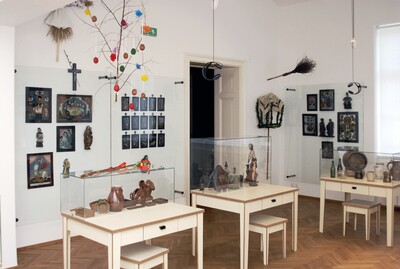
The ethnographic exhibition of the Ostrava Museum focuses mainly on the cycle of annual customs, ceremonies and festivals in the territory of Ostrava and its near and distant surroundings. Outskirts of Ostrava are affected by the influence of neighbouring Lašsko region, Opava and Těšín Silesia, sometimes even by Valašsko region.
The Ostrava region is ethnographically very heterogeneous, it cannot be called ethnographic in the true sense of the word. It has been caused by big fluctuation of the population, its beginnings we can find in 1840s in connection with the development of the mining and metallurgical industries. In newly created industrial centres there were many different nationalities. Apart from the Czechs, it was mainly Poles, less Germans. Most of the workers came from agricultural settlements, so working in the factories changed their way of life significantly. Some commuted for work, others moved with (or without) their families to the city, where they were given accommodation. The way of family life, especially the daily routine, changed. New neighbourly relations were formed, workers' associations were established in the factories, and new social and cultural organisations were created.
The themes of the exposition are mainly connected to the traditions of those parts of Ostrava that still have rather village and agricultural character and which are more or less distant from the city centre and also urban and association traditions to a lesser extent (Shrove Tuesday, Easter traditions, Saint John's Feast Day traditions, harvest feasts, Advent, Christmas and others). The celebration of the feasts of the patron saints of firefighters (St. Florian) and miners (St. Prokop and St. Barbora) was also significant.
The exhibition shows objects and photos from the museum collections that refers to local traditions and feasts. Remarkable are, for example, reverse glass paintings depicting Stations of the Cross or St. Barbora with the miners, a carved holy water font with St. Veronica, wood carvings and reverse glass paintings with the theme of the Holy Trinity, wood carvings of St. Florian and Madonna and other similar object from the 19th century. The objects reminding us of baptism or pilgrimages are also interesting. Among the ceremonial objects there are the parts of carnival masks and a straw figurine of Mařena from Ostrava-Pustkovec or a spring decorated small maypole.
The exposition is equipped with headphones, in which visitors can listen to the melodies of folk and mining songs, and a television screen on which videos of customs from the Ostrava region are projected.
Akce: Otevřít verzi pro tisk