
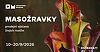
 Výstava nabídne pohled na desítky druhů masožravých rostlin z celého světa – od známých mucholapek přes elegantní láčkovky až po vzácné sběratelské rarity. Seznámíte se s fungováním důmyslných pastí těchto rostlin a vybrané druhy si můžete rovnou zakoupit. Výstava potrvá do 20. 9. 2026 a lze ji navštívit pouze se vstupenkou do muzea.
 ČTVRTEK 17. 9., 17 h | Srdečně zveme na vernisáž výstavy Japonsko v Ostravě. Výstava u příležitosti 10. výročí Česko-japonského kulturního centra představuje dlouhodobý a živý dialog mezi Českou republikou a Japonskem rozvíjený prostřednictvím festivalů, vzdělávání, umění i každodenního života v Ostravě. Nejde pouze o prezentaci exotické kultury, ale o příběh lidí, kteří vytvářejí most mezi vzdálenými světy. Japonsko v Ostravě lze nejen objevovat, ale také prožít a stát se jeho součástí.
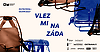 Ve čtvrtek 1. října zahájíme výstavu Vlez mi na záda, která se věnuje tématu nošení dětí nejen v regionu, ale napříč několika kulturami, staletími i společenskými vrstvami. Výstava představí nošení dětí jako univerzální lidskou činnost, která pomáhá vytvářet pouto mezi rodičem a dítětem a přináší také technické výzvy a inovace.

GEOLOGY – PALEONTOLOGICAL COLLECTION
Paleontological and geological collection of the Ostrava museum
The exhibitions and repositories of the Ostrava Museum contain more than 20,000 items with Carboniferous fauna and flora coming from non-productive (Lower and Upper) and coal-bearing (Upper) Carboniferous of the Morava region.
The regional geological exhibition presents a cross-section of collections related to the geology and palaeontology of Ostrava and its surroundings. The exhibition includes Šusta's collection, represented by minerals from the Ostrava and Karviná mines and Carboniferous fossils; Father Slavíček's collection, containing minerals and fossils from the Štramberk limestones; and the collection of semi-precious stones from Hončova Hůrka assembled by Josef Valášek.
The collection of Václav Šusta from 1924–1953 is the substantial part of the collections in the Ostrava Museum. It contains over 6,000 items predominantly with flora of the productive Carboniferous of the Czech part of the Upper Silesian Basin. The floristic material comes first of all from the Karviná Formation of mines in the Karviná region. Fauna of the productive Carboniferous is represented by unique arthropod findings from the Karviná Formation, as well as by collections from faunistic horizons of the Ostrava Formation. A small part of the collection represents fauna and flora from the Moravian-Silesian Culmian. The collection also includes holotypes of species from Upper Carboniferous flora and fauna described by Šusta and other later authors.
History of the paleontological and geological collection of the Ostrava museum
As with all the natural history collections of the Ostrava Museum, the creation of the geological collection fund is closely related to the activities of the Natural Science Society. The mineralogical-geological section started its activities in 1923. Its founder and first leader was Václav Šusta.
In 1928, the society bought and later donated to the museum the collection of minerals and rocks of the Olomouc naturalist Jindřich Laus and František Langer from Branná. These became the basis of the systematic part of mineralogical-petrographic collections.
In 1933, Šusta donated the greater part of his collection of minerals, rocks and fossils originating mainly from Ostrava (approximately 3,000 specimens) to the museum. After his death in 1953, all his lifetime collections were transferred to the museum collections.
The paleontological collection of the Ostrava Museum preserves for future generations the material accumulated over more than eighty years, starting in 1921, when Šusta started as a mining engineer at the Františka and Hlubina mines in Karviná. His collections come mainly from mines in the Karviná region and are dominated by flora.
The Carboniferous fauna, collected between 1954 and 1990 by František and Milada Řehoř, comes mainly from exploratory wells and mines in the Czech part of the Upper Silesian basin. The flora collection was created by Eva Purkyňová in the same period. The entire paleontological collection today numbers 22,000 specimens.
The rarest part of the collection is the collection of holotypes of flora and fauna of the productive Carboniferous (148 pieces). These are fossils described as the first of their kind. Father Slavíček's collection is also interesting, containing a collection of petrified Mesozoic fauna from Štramberk.
The mineralogical-petrographic collection fund currently includes more than 5,000 pieces of minerals and rocks. It consists of a systematic and regional collection. Part of the regional collection is also a collection of polished semi-precious stones from Hončova Hůrka, purchased from Josef Valášek.
Carboniferous
The Carboniferous is a geologic period. The name Carboniferous means "coal-bearing" and reflects the fact that many coal beds were formed globally during that time.
The main Carboniferous plants were the Equisetales (horsetails), Sphenophyllales (scrambling plants), Lycopodiales (club mosses), Lepidodendrales (scale trees), Filicales (ferns), Medullosales (informally included in the "seed ferns", an artificial assemblage of several early gymnosperm groups) and the Cordaitales.
The Upper Silesian Basin extends more than 7,000 km2, of which about 1,500 km2 are occupied by the coal-bearing Carboniferous in the territory of the Czech Republic. Its southern border is not reliably established.
The Ostrava and Karviná formations
The Ostrava Formation (Ostravské vrstvy) is almost exclusively built of clastic sediments. They are conglomerates and sandstones, siltstones to claystones, coal and altered acid volcanic dusts.
In the Ostrava Formation the fauna is concentrated in 190 faunistic (marine, Lingula-bearing and freshwater) horizons.
The Karviná Formation (karvinské vrstvy) is formed exclusively by continental clastic sediments, namely conglomerates, sandstones, siltstones to claystones and coal.
In comparison with the Ostrava Formation, the Karviná Formation is considerably poorer in the occurrence of faunistic horizons. As a maximum 40 rather unstable freshwater horizons can be found there.
Štramberk limestone
The world-famous Štramberk Limestone is the most famous member of the sequence of the Štramberk area in the Silesian Unit of the Outer Western Carpathians. The oldest published knowledge appeared in the first half of the 19th century, when the quarrying of the limestone began. Already then, the Štramberk Limestone attracted the attention of scholars and naturalists. Most of the limestones are of Upper Jurassic (Tithonian) age, but Cretaceous sediments are also present. In the present time only one quarry is active (at Kotouč hill). Large vugs filled with calcite crystals could be found from time to time.
Cretaceous teschenites
Cretaceous teschenites and associated with them alkaline picrites, tephrites, basanites occur mainly in the north-western and western parts of the Carpathians. Teschenite - fine-grained, rather dark-coloured, intrusive igneous rock that occurs in sills (tabular bodies inserted while molten between other rocks), dikes (tabular bodies injected in fissures), and irregular masses is always altered to some extent. It consists primarily of plagioclase feldspar, analcime, and titaniferous augite, with barkevikite, nepheline, and olivine usually in lesser amounts. The plagioclase crystals often are encased in the augite to give teschenite an ophitic texture. The rock is named for its occurrence near Teschen (now Těšín in Czech or Cieszyn in Polish). Teschenite grades into picrite when the olivine content increases.
Based on mineral composition, they belong to three groups:
1/ porphyritic picrite-diabase
2/ teschenite
3/ monchiquite
(and their transitional types).
Sorting of showcases in the direction of the tour:
§ Minerals and rocks of the Ostrava-Karviná Coalfield
§ Fauna and flora of the non-productive Carboniferous
§ Flora of the Ostrava Formation
§ Fauna of the Ostrava Formation
§ Fauna of the Karviná Formation
§ Flora of the Karviná Formation
§ Štramberk limestones
§ Teschenite (mainly from Hončova hůrka)
Akce: Otevřít verzi pro tisk