
 STŘEDA 8. 4., 17 h | Karol Piegza, rodák z Lazů u Karviné, byl horník, učitel, zaolšský folklorista a sociální aktivista. Ve své sběratelské činnosti shromáždil více než 300 textů lidových písní reflektujících náročný život horníků. V rámci programu budou představeny hornické prapory a stuhy včetně jejich ikonografie. Součástí setkání bude také recitace vybraných ukázek písňových textů a básní tematizujících těžký úděl horníků na Karvinsku. Setkání probíhá v polském jazyce a připravil ho Stanisław Gawlik.
The cafés of Ostrava: a mirror of an era, an aroma of memory
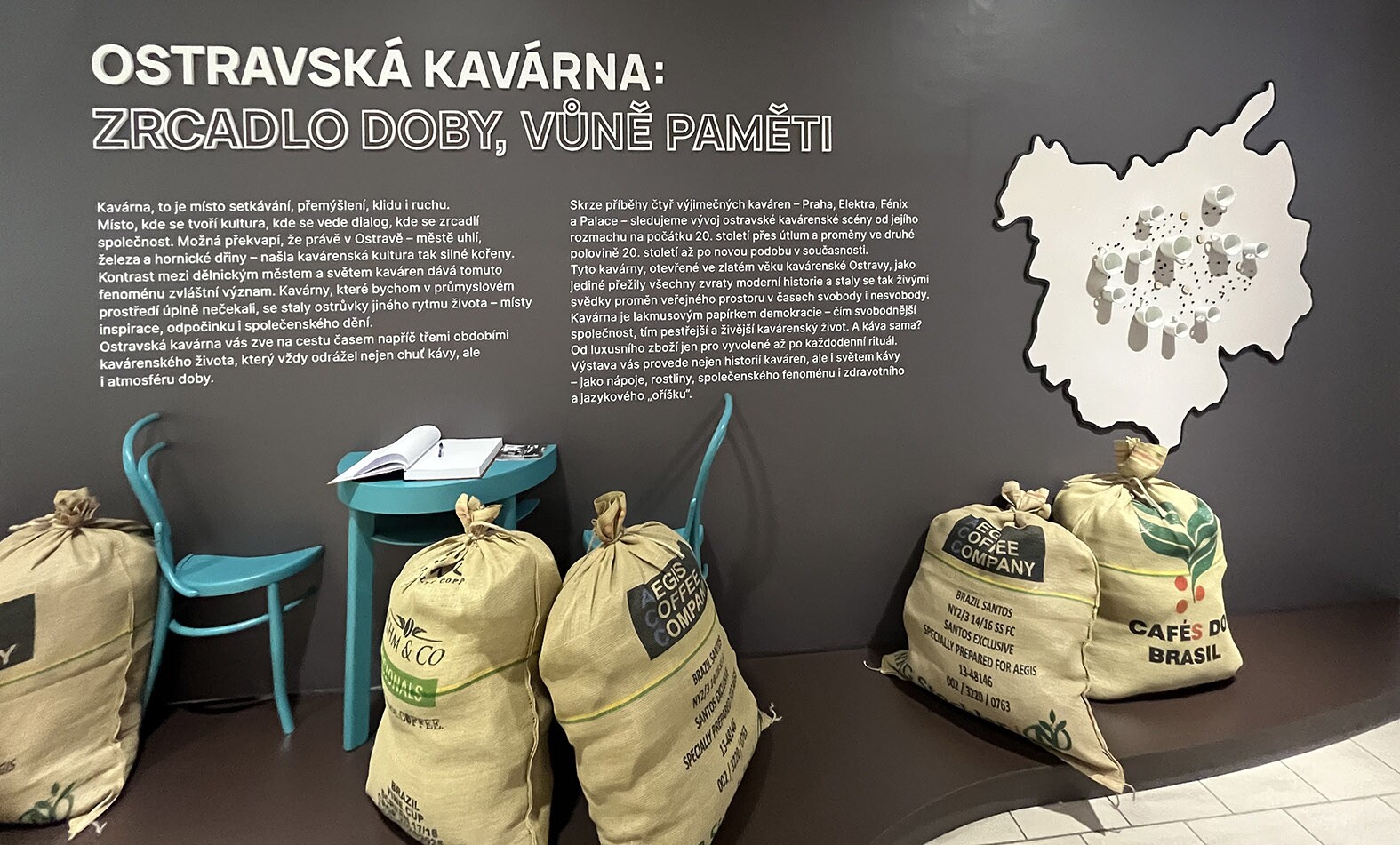
A café is a meeting-place and a haven for contemplation, an oasis of calm or a bustling hive of activity. It is a place where people create culture and engage in dialogue – a place that holds up a mirror to society. It might surprise you to learn that Ostrava – a city built on coal, iron and industrial toil – proved such a fertile ground for café culture. The stark contrast between the hard-working city and the refined world of its cafés makes this phenomenon particularly remarkable. Ostrava’s cafés – the last thing we would expect in such an industrial environment – became “islands” within the city, places where people found inspiration, relaxation, and a vibrant community.
Our exhibition “The cafés of Ostrava” invites you to travel back in time and experience three periods of café culture in the city – each of them bearing aromatic witness to a particular era.
Through the stories of four iconic Ostrava cafés – the Praha, Elektra, Fénix and Palace – we trace the evolution of the city’s café scene from the boom years of the early 20th century, through the decline and transformation of Ostrava’s cafés in the second half of the century, to their new incarnations in the present day. Established in the golden age of Ostrava’s café culture, these are the only cafés in the city that have survived throughout all the turbulence of modern history and have become living witnesses to the evolution of public spaces in times of both freedom and totalitarianism.
A café is a litmus test of democracy – the freer a society, the more vibrant and diverse are its cafés. And what about coffee itself? Once a luxury item available only to a select few, it has now become a much-loved daily ritual for many. This exhibition will not only guide you through the world of cafés; it will also reveal the fascinating world of coffee itself – as a plant, a drink, and a social and cultural phenomenon that reaches into a plethora of domains including health, language, and much more.
Akce: Otevřít verzi pro tisk