
 PÁTEK 2. 10., 15.30 h | O kavárnách i osobnostech, které v nich tvořily a diskutovaly, s kurátory výstavy, historiky Evou Ševčíkovou a Jiřím Sochorkem. Výstava Ostravská kavárna představuje historii kaváren od přelomu 19. a 20. století až po současnost. Přibližuje je jako místa setkávání, architektonické fenomény i centra kulturního a společenského života. Návštěvníci a návštěvnice se dozvědí více o podobě legendárních podniků, jejich proměnách i osobnostech, které byly s kavárenským prostředím spojené. Kapacita prohlídky je 25 osob. Rezervace zdarma od 13. 9. 2026 na GoOut.
 SOBOTA 3. 10., 10 h a 13 h | Fotoarchivem historických snímků Ostravského muzea s historikem Jiřím Sochorkem. Sbírka čítá tisíce snímků, na kterých lze sledovat proměny města, jeho ulic, známých staveb i podob bydlení v různých dobách. Autentické fotografie přibližují, jak se Ostrava postupně utvářela a měnila – od jednotlivých budov až po atmosféru jejích čtvrtí. Prohlídky se konají v 10:00 a ve 13:00. Kapacita každé prohlídky 6 osob. Rezervace zdarma od 13. 9. 2026 na GoOut.
 ÚTERÝ 6. 10., 17 h | O proměnách lokální architektury a způsobu bydlení od 13. do 16. století s archeologem Zbyňkem Moravcem. Jak vypadaly domy, ve kterých žili obyvatelé středověké Ostravy? Co o jejich podobě, uspořádání a každodenním provozu prozradily archeologické výzkumy posledních desetiletí? Kapacita přednášky je 30 osob. Rezervace zdarma od 13. 9. 2026 na GoOut.
 ÚTERÝ 6. 10., 16 h | Výběr ikonických předmětů 50. – 90. let ze sbírek Ostravského muzea s kurátorkou uměleckohistorických sbírek Monikou Piegerovou. Co dělalo domov domovem v druhé polovině 20. století? Výklad přiblíží materiály, technologie a tvary, které formovaly estetiku československých domácností, i nadčasový design, vybavení a technické vymoženosti tvořící pomyslné hvězdy tehdejších interiérů. Kapacita programu je 15 osob. Rezervace zdarma od 13. 9. 2026 na GoOut.
Ostrava in 1938–1945
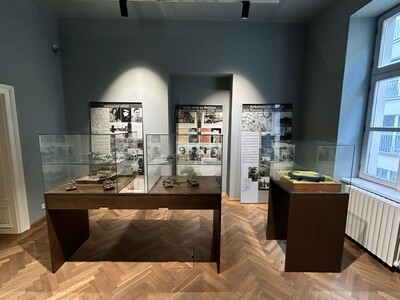
CZECHOSLOVAKIAN FORTIFICATIONS IN THE MORAVIAN OSTRAVA SECTOR (1935–1938) (panel 1)
The heavy fortifications around Moravian Ostrava formed an inseparable part of Czechoslovakian defences. The construction took place between 1935 and 1938. Placement of the facilities in the Moravian Ostrava sector is described on the map. The construction of MO-S 1 and MO-S 35 bunkers was not carried out. Bunkers MO-S 2 up to MO-S 8 are different from the other facilities in the general fortification. French consultants were used during these projects.
The facilities of the heavy fortifications of the Moravian Ostrava sector in September 1938 consisted of 4 cm antitank cannons – exhibit 36; heavy machine guns – exhibit 37; and light machine guns – exhibit 26. It should be pointed out that some weapons and other components were missing in September 1938, mainly 9 cm minethrowers – exhibit 38; 10 cm howitzers – exhibit 38; and a machine gun turret.
Guarding and protecting the border at the fortifications around the area of Bohumín-Jamnice was the fourth regiment under the command of Colonel Jan Satorie.
The heavy fortifications in the Moravian Ostrava sector in 1938 is evident from this model of the MO-S 11 bunker. The heavy machine gun is also on display as exhibit 37. Other fortifications can be seen in the pictures.
THE FATE OF THE CITY AFTER MUNICH AND DURING THE NAZI OCCUPATION (1938–1945) (panel 2)
The appeasement at Munich in 1938, together with an ultimatum issued by the government of Poland, was a disastrous event in the history of Moravian Ostrava. Eventually parts of Ostrava were occupied by Germany and Poland, and Moravian Ostrava became home to thousands of refugees from the occupied territories (panel 2, pict. 1).
Moravian Ostrava was occupied by the German army on March 14, 1939, and a resistance of sorts began to take root. These underground organizations took many forms and very complicated structures. Many who got involved ended up paying for it with their lives. On the Jewish inhabitants approximately 8,000 from Ostrava were killed during World War II. Moravian Ostrava suffered a devastating air raid on August 29, 1944 (panel 2, pict. 2), when planes of the 15th American air force descended upon the city, resulting in the deaths of 409 people, with 123 houses destroyed, 750 houses severely damaged and another 725 lightly so.
The period of 1938 to 1945 is depicted mainly by pictures of the people who actively participated in the underground fight against occupation forces. On September 24, 1942, a decree was issued in Berlin for the execution of members of the paramilitary organization “Obrana národa”, or “Defence of the people”. More proof of the dark days of that period.
THE LIBERATION OF THE CITY (panel 3)
Moravian Ostrava was liberated during the Ostrava operation of the troops of the 4th Ukrainian Front that took place between March 10 and May 5, 1945. The commander of the 4th Ukrainian Front was general Petrov, later replaced general Jeremenko (panel 3, pict. 1) on March 26, 1945. The German first tank division was beaten back by the Soviets during this operation.
Moravian Ostrava was liberated on April 30, 1945, by the first footguards of colonel general Grečko and the 38th army group of colonel general Moskalenko (panel 3, pict. 2), both with support of the 8th air force commanded by general Ždanov.
Members of the 1st Czechoslovak tank brigade of the USSR armed forces and the 1st integrated air force unit helped with the liberation of Ostrava region and Moravian Ostrava. Casualties were 659 soldiers of Red Army, 321 civilians and 2 Czechoslovak tank soldiers killed during the action. Property losses caused by the war were enormous. The withdrawing German army destroyed several motorway and railway bridges (panel 3, pict. 10). A monument and mausoleum were constructed in Komenský Park and dedicated to the Red Army on April 30, 1946 (panel 3, pict. 12), as part of the commemoration of the first anniversary of the liberation of the city. Urns containing the remains of the dead soldiers of the Red Army, members of the Czechoslovak tank brigade and citizens of the city who were killed during the fighting were interred in the monument.
Models of the weapons of war used by both sides are a reminder of the Ostrava operation. As for the actual weapons, a heavy machine gun Maxim 1910, used by the Red Army during World War II, is on display. Several pictures on display are a living document of that period.
Akce: Otevřít verzi pro tisk