
Ostravské muzeum
https://www.ostrmuz.cz/website/imagemenu/stale-expozice/webpage/webpage%5B11%5D/Coalmining in the Ostrava region
Coal mining in two centuries completely changed not only the face but also the importance of the small provincial town. The rapid and unique development of a small town into a wealthy, cultural and self-confident big city in the early 20th century was caused by several stimuli. But all of them were related to coal mining. The acute raw material crisis of the Austrian monarchy in the 18th century and the accidental discovery of coal in Silesian Ostrava in 1763 initiated an increase of new inhabitants and influenced the fate of thousands of immigrants.
Not only poor and illiterate people came to work to Ostrava, the best graduates of mining universities, prominent mining engineers from the Austrian monarchy and German countries also came to the newly built town and mines. Visionaries and businessmen with their novel ideas and donors with their capital also found a "promised land" in Ostrava. These people managed to bring to Ostrava not only the most modern railway in Europe at the time and the first blast furnace in the Austrian monarchy, but also brought know-how, knowledge and modern technologies that found their application in the difficult natural conditions here. These technologies helped to find solution for mining black coal from depths of around 1 300 metres below the surface.
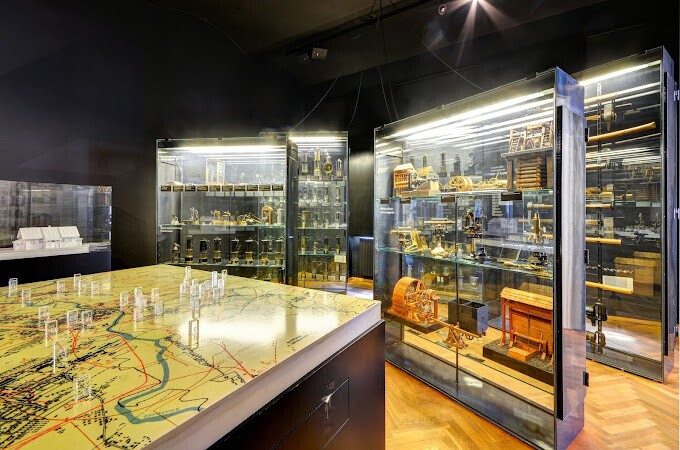
The model of the city from 1928 with headframes, workers' colonies, mining branch lines and a system of funicular railways illustrates mining as the industry that was dominant and decisive for Ostrava for almost two centuries.
The mining exhibition of the Ostrava museum tries to present at least a part of rich legacy of Ostrava mining through various artefacts. The work tools presented here illustrate the hard work of miners, whether by size or weight of the tool. To a large extent, the mining lighting fund is presented, which is unique in terms of number and variety in the Czech Republic and Central Europe.
Last but not least, the exhibition presents important personalities, patrons and mining engineers of the time who contributed to the development of mining in the Ostrava region and often devoted their entire lives to it.
The social aspect of mining Ostrava is depicted in the models of houses from the worker’s colonies, which document the difficult living conditions of miners, when large working families often lived on a few square metres with lodgers.