
Ostravské muzeum
https://www.ostrmuz.cz/website/imagemenu/stale-expozice/webpage%5B2%5D/webpage%5B9%5D/GEOLOGY – MINERALS AND ROCKS
Mineral definition and classification
A mineral is an element or chemical compound that is normally crystalline and that has been formed as a result of geological processes.
There are currently more than 4,000 known minerals, according to the International Mineralogical Association, which is responsible for the approval of and naming of new mineral species found in nature. Of these, perhaps 100 can be called "common", 50 are "occasional", and the rest are "rare" to "extremely rare".
Differences between minerals and rocks
A mineral is a naturally occurring solid with a definite chemical composition and a specific crystalline structure. A rock is an aggregate of one or more minerals. A rock may also include organic remains and mineraloids. Some rocks are predominantly composed of just one mineral. For example, limestone is a sedimentary rock composed almost entirely of the mineral calcite. Other rocks contain many minerals, and the specific minerals in a rock can vary widely. Some minerals, like quartz, mica or feldspar are common, while others have been found in only four or five locations worldwide. The vast majority of the rocks of the Earth's crust consist of quartz, feldspar, mica, chlorite, kaolin, calcite, epidote, olivine, augite, hornblende, magnetite, hematite, limonite and a few other minerals. Over half of the mineral species known are so rare that they have only been found in a handful of samples, and many are known from only one or two small grains.
Commercially valuable minerals and rocks are referred to as industrial minerals. Rocks from which minerals are mined for economic purposes are referred to as ores (the rocks and minerals that remain, after the desired mineral has been separated from the ore, are referred to as tailings).
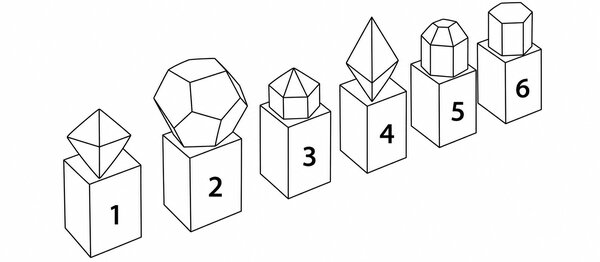
Crystal-shaped vitrines:
1. Element class and Halide class - diamond
2. Sulphide class - pyrite
3. Oxide class - quartz
4. Carbonate class - calcite
5. Sulphate class and Phosphate class - apatite
6. Silicate class - amphibole